Originally published on Patch.com, January 25, 2010
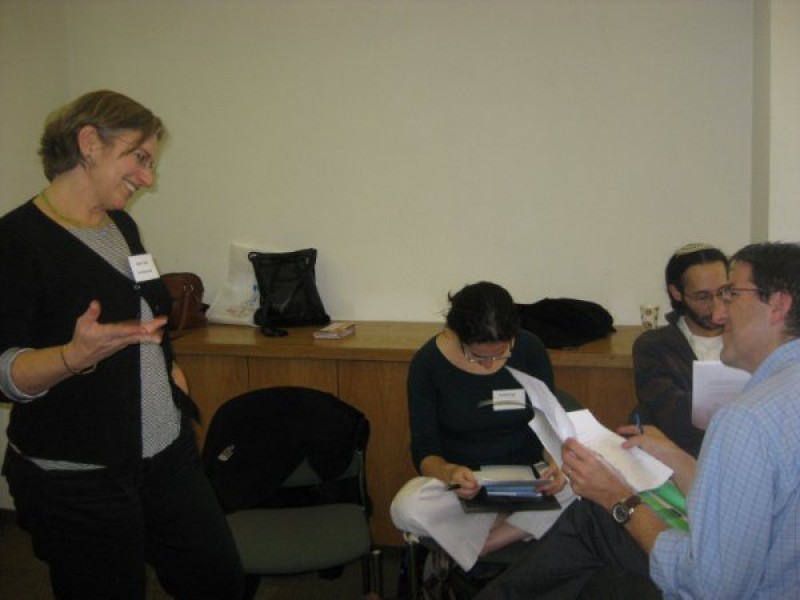
Within an unassuming synagogue in Summit works a peace activist, a leader and a trail blazer. Rabbi Amy Small, one in an ever-expanding minority of female rabbis, leads the Reconstructionist Congregation at Beth Hatikvah.
She balances her many duties as rabbi–which include teaching, working in consultation, helping to prepare families for big events, pastoral care, networking, and problem-solving–with her duties as peace activist and mother of three college students. She serves on boards in the community and was president of the Reconstructionist Rabbinical Association from 2003 to 2005, when she was asked to join yet another peacemaking organization that called itself the National Interreligious Leadership Initiative for Peace in the Middle East.
“NILI was formed in 2003 to unite religious leaders of Christianity, Judaism and Islam to form a unified body that, as represented by religious leaders, would lobby for firm and active changes and would work with the U.S. and Middle Eastern countries to (end the conflict),” said Small.
Fifteen religious leaders, united under NILI, broke borders by traveling to Israel, Jordan and the West Bank this past December to spread a message of peace. The delegation was made up of Christian, Jewish and Muslim leaders who felt that adding a strong American voice might help with the peacemaking process.
Rabbi Amy Small represented the Reconstructionist Rabbinical Assembly and was one of three Jewish leaders on the trip. During the trip, NILI met with its counterpart, the Council of Religious Leaders of the Holy Land, in order to work together and seek understanding to help end this situation.
“We need to lead with clear and consistent voices in peacemaking for this conflict,” Small said. “(Our counterparts and we) support each other and working together is central for moving along the peacemaking process.”
During this trip, Small learned the importance of what she calls “active listening.” She defined this as listening to gain a better understanding, rather than to debate, defend or argue. She practiced listening with her “ears and heart, even when you don’t understand.”
She encountered many challenging moments when listening to Palestinians who expressed hatred towards Israel. As a Zionist, meaning that she is a supporter of the state of Israel, she had difficulties holding back the urge to argue.
“We all bring different narratives and baggage, so it is difficult to set our baggage aside and listen completely,” Small said. “We need to understand the position our friend takes, even if we don’t agree with him or her; learning from each other is a start and we take that to our communities.”
Small said that many members of her congregation considered her trip “empowering.” Some others expressed opposing opinions, which she continues to actively listen to.
She beseeches the people of Summit and members of the Jewish community to be informed about the situation in the Middle East through a variety of sources–especially Jewish and Israeli. She also asks that people advocate to their community and political leaders to get active in the peacemaking process.
“I’d like the Jewish community to be committed to itself,” Small said. “And I’d certainly like the result of that commitment to be that we exert our influence in any way we can to make this world a better place. ”
To read Rabbi Small’s blog about her experiences in the Middle East this past December visit http://rabbiamyjoy.wordpress.com. To learn more about NILI visit http://www.nili-mideastpeace.org. For more information about the Reconstructionist movement visit: http://jrf.org.
 Rayna J Lewis